
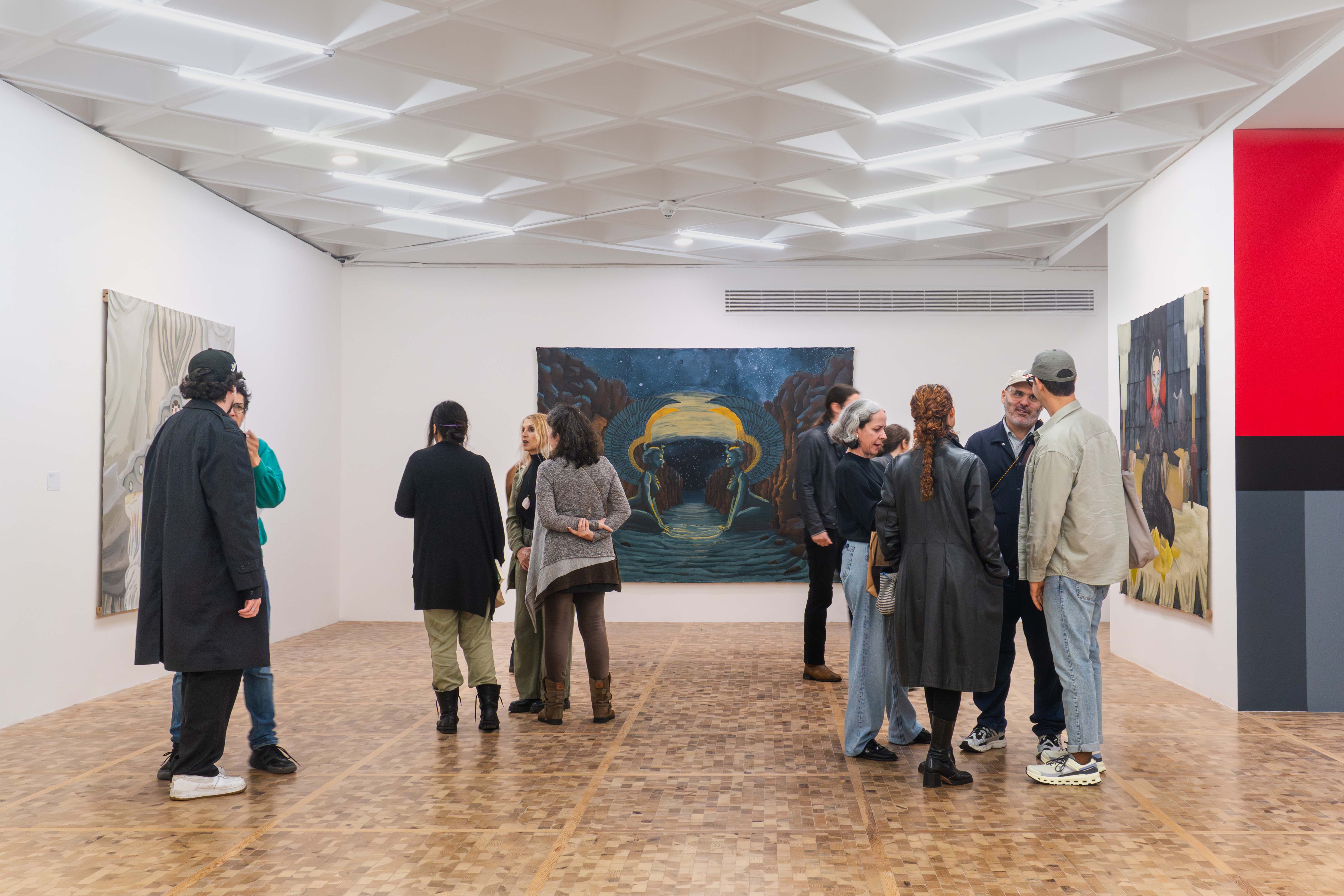

For Rufino Tamayo, Rodolfo Nieto, and Francisco Toledo, Paris was one of those journeys that left a lasting mark. At different moments during the second half of the 20th century, the French capital became a space for experimentation for these three artists from Oaxaca. Far from Mexico, they encountered new techniques, ideas, and connections with artists, writers, galleries, and printmaking workshops while remaining rooted in the traditions, imagery, and cultural references that had shaped their work.
Tamayo, Nieto, Toledo: The Paris Years, curated by Juan Carlos Pereda, brings their work together to explore this transformation. On view at the Museo Tamayo from August 20, 2026, through February 15, 2027, the exhibition explores how three generations of Mexican artists developed their own voices while becoming part of the international art scene.
A different way of seeing Mexico
Rufino Tamayo arrived in Paris in 1950, already an established artist after years in New York. He would spend a decade in France, where his work gained an international dimension. Rather than turning to folkloric representations of Mexico, Tamayo explored ideas deeply rooted in pre-Hispanic culture—duality, spirituality, and the expressive power of color—and translated them into a modern visual language.
Paris also expanded his work beyond painting. He experimented with lithography and artists’ books, collaborating with writers and printmaking workshops. His presence in the French capital also made him an important reference for younger Mexican artists searching for alternatives to the nationalist tradition that had dominated the country’s art scene.
Among them was Francisco Toledo
Toledo’s relationship with Tamayo was both artistic and personal. After Tamayo returned to Mexico, he gave Toledo some of his working tools and helped connect him with important figures in the European art world. In Paris, Toledo worked at Stanley William Hayter’s Atelier 17 and exhibited at Galerie Karl Flinker.
His work evolved without losing its connection to Oaxaca. Animals, hybrid creatures, nature, and the Indigenous traditions of southern Mexico became part of a visual language that was at once local and universal.
The imagination of Rodolfo Nieto
Rodolfo Nieto took a different path. A member of Mexico’s Generación de la Ruptura, he developed in Europe a deeply personal language built around drawing, collage, and printmaking.
His imaginary bestiary became one of his most recognizable contributions. In works such as Zoología mental, humans and animals merge into hybrid figures that evoke fear, solitude, vulnerability, and existential anxiety.
Nieto was also closely connected to Paris’s literary and cultural circles. He illustrated the French edition of Jorge Luis Borges’s Manual de zoología fantástica and worked in several of the city’s leading printmaking studios.
Together, the three artists reveal how travel can become a form of creative transformation. Their time in Paris did not erase their Mexican identity; it allowed them to reinterpret it.
That is ultimately what makes The Paris Years compelling. The exhibition is not simply a portrait of three artists abroad. It is a story about movement, influence, and the possibility of looking at home from somewhere else.
For travelers interested in art, Mexico, and the cultural connections that cross borders, it is an invitation to see Oaxaca—and modern Mexican art—with a different perspective.
And receive exclusive information to travel through Mexico in style!