
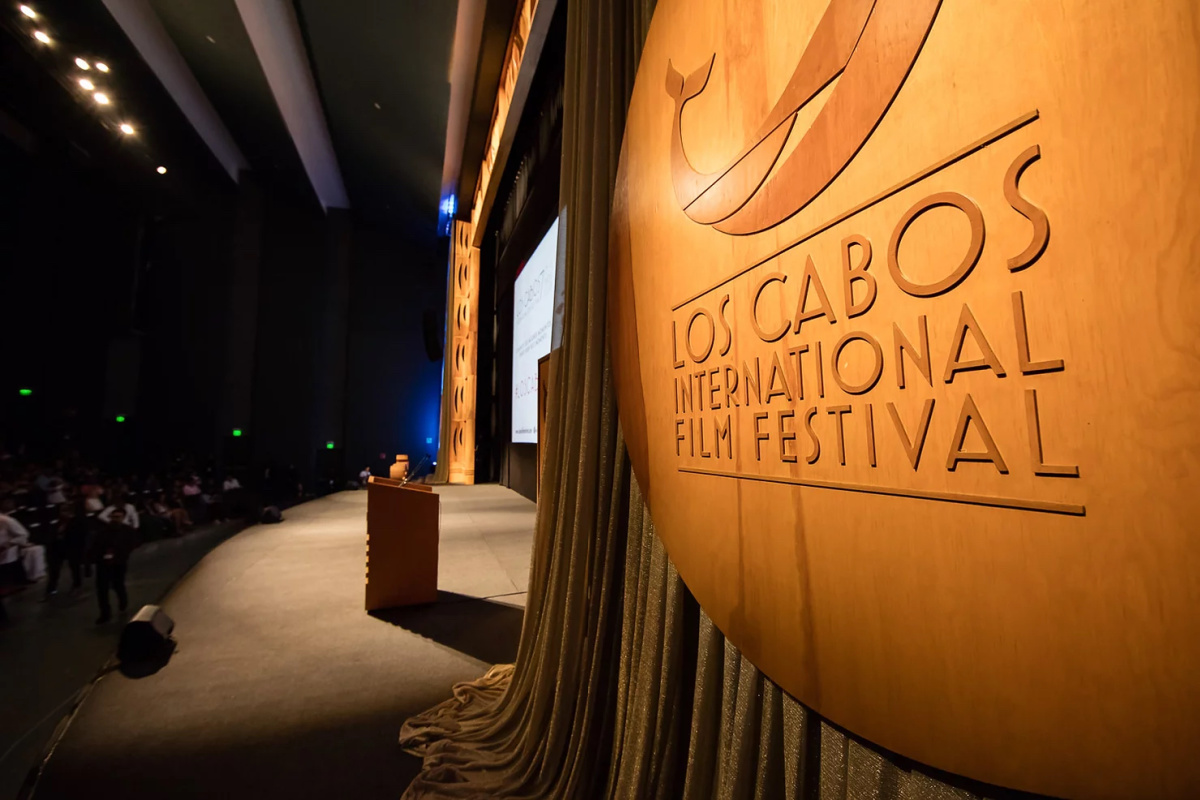

Los Cabos International Film Festival, held on the picturesque Baja California peninsula, has emerged over the past decade as a beacon of creativity and innovative filmmaking on the international circuit. While at first glance it may seem like just another event in the film festival season, its impact and relevance go beyond screenings and awards.
Rather than simply serving as a platform for auteur films and independent productions, Los Cabos has become a catalyst for the film industry in Latin America and a cultural bridge between North America and the rest of the world.
Los Cabos International Film Festival not only celebrates the art of filmmaking, but also acts as a meeting point for a diverse range of voices and perspectives that are often underrepresented at other festivals. With a particular focus on Latin American cinema and its intersection with U.S. and Canadian cinema, it encompasses a wide range of genres, styles and themes. From narratives that explore the complexities of cultural identity to visual experiments that challenge the conventions of traditional cinema, the festival provides a platform for filmmakers to explore and share their unique vision of the world. Among his most representative works, which earned him numerous awards, are “Naturaleza Muerta” (1954), known for the famous watermelon slices alongside two bottles, found at the Museo Soumaya, and “Dualidad” (1964), possibly one of his greatest works, depicting a duality of light and darkness with pre-Hispanic scenes referencing the gods of Nahuatl cosmogony, displayed at the Museo de Antropología e Historia.
The festival has been a prominent stage for the presentation of works by some of Mexico’s most influential artists and directors, who have used this platform to share their unique perspectives and cinematic visions.
Directors such as Alejandro González Iñárritu, Guillermo del Toro and Alfonso Cuarón have presented their work in Los Cabos, attracting the attention of critics and audiences from around the world. Artists such as Michel Franco, with his film “Las Hijas de Abril,” and Tatiana Huezo, with “Noche de Fuego,” have brought their unique vision to the festival. Lila Aviles, with her acclaimed “La Camarista,” has also used the Los Cabos setting as a platform to explore themes of identity and personal experience.
These filmmakers not only bring their talents and perspectives to the festival, but also inspire a new generation of creators. Their participation in Los Cabos underscores the festival’s importance as a key meeting point for the Mexican and global film industry.
And receive exclusive information to travel through Mexico in style!