
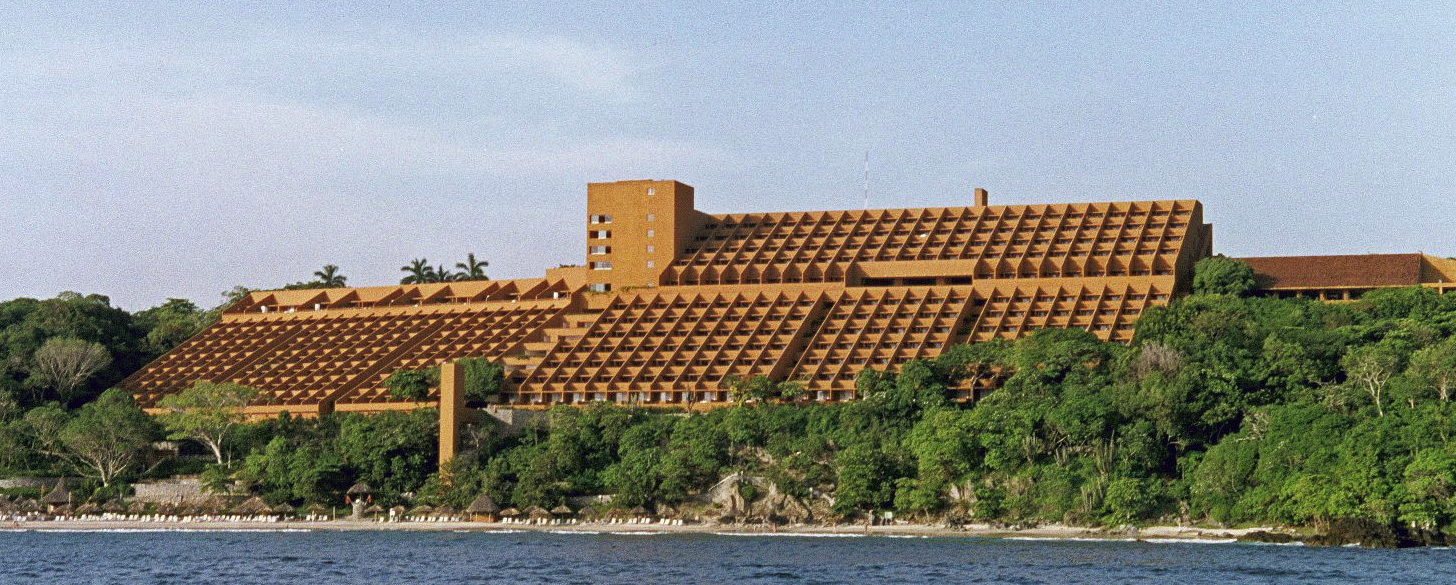

Through family archives, original drawings, and pieces that have long been out of production, Clásicos Mexicanos is reconstructing a chapter in the history of Mexican design. Founded in 2018, the project brings back furniture and objects by figures such as Mathias Goeritz, Ricardo Legorreta, and Manuel Parra, in collaboration with their families and heirs.
Its work offers a fresh perspective on modern Mexican architecture and design through the objects, materials, and forms that defined the period, revealing how this legacy continues to shape contemporary spaces. We spoke with them:
How did Clásicos Mexicanos come about, and what led you to recognize the value of these pieces?
Clásicos Mexicanos grew out of our admiration for Mexican modernism. During that period, architects, artists and designers envisioned a new country and helped shape it at every scale, from the city to the chair. We realized that much of the furniture created during those years was no longer available. Many pieces had been designed for specific architectural projects and eventually faded from view, scattered among private collections or kept in family archives that very few people knew about. We launched the project convinced that this legacy should not remain confined to books. We began researching archives, documenting each piece, and developing it in collaboration with its original designers or their heirs. For us, recognizing the value of these works today means understanding where we come from and bringing something that belongs to us back into the present.
What contributions of 20th-century Mexican architecture and design remain relevant today? What can international travelers discover through these works?
They are part of our history and heritage, but they also form an important foundation for contemporary Mexican design. Many of the questions designers are asking today had already been explored by figures such as Michael van Beuren, Manuel Parra, and Mathias Goeritz, who addressed them with remarkable talent: how to engage with traditional craftsmanship, make the most of local materials, and develop a modern language without losing a sense of place.
For travelers, these objects offer another way to discover Mexico. Furniture is architecture on a different scale. An Antonio Attolini Lack chair reflects the same austerity found in his houses in El Pedregal, while the Vallarta and Ixtapa collections echo the color and geometry that Ricardo Legorreta brought to projects such as the Camino Real Hotel. These pieces also reveal how a generation of designers brought international avant-garde movements, including the Bauhaus, into dialogue with Mexican traditions and craftsmanship.
What criteria guide your selection of pieces, and what are the main challenges of reproducing them faithfully while keeping their legacy relevant today?
There is no set formula. We select pieces that we consider important to the story told by our collection. They were created by architects and designers who made significant contributions at a decisive moment for the country, when architecture was closely connected with art, literature, and sculpture. Even so, there are a few guiding principles: The piece must contribute something relevant to the history of architecture and design in Mexico. It must be supported by historical documentation, such as drawings, photographs, original examples, and testimonies.
We must be able to develop it in collaboration with the original designer or those entrusted with preserving their legacy. The greatest challenge is remaining faithful to the original in terms of proportions, materials, and manufacturing processes. Some pieces that appear deceptively simple, such as Po Shun Leong's chairs, have presented some of the greatest technical challenges for our team. We see these designs as living objects, made to be used today in homes, hotels, and offices, rather than treated as relics. Nostalgia looks to the past and stays there. We look back to bring it into the present.
For visitors to Mexico City interested in architecture and design, which buildings and spaces would you recommend exploring to understand the evolution of Mexican modernism?
We would, of course, begin with the works of the architects and designers represented by Clásicos Mexicanos. Several places offer insight into the evolution of architectural language and the relationship between design, art and the city.
Ciudad Universitaria, UNAM (1949–1954). A UNESCO World Heritage Site and one of the great expressions of Mexican modernism. Mario Pani and Enrique del Moral led the project, based on an initial scheme developed by three students: Teodoro González de León, Armando Franco Rovira and Enrique Molinar.
Houses by Antonio Attolini Lack in Jardines del Pedregal. Located near Ciudad Universitaria, these houses reflect the modern architectural tradition of the area while taking formal simplicity to a distinctive level.
Museo Experimental El Eco, by Mathias Goeritz (1953). An architectural expression of his concept of Emotional Architecture and an essential work for understanding his thinking. Some of the chairs we reproduce originated in this project. Casa Píldora, by Roberto Eibenschutz Hartman (conceived in 1965). A distinctive example of organic architecture, characterized by curved walls, colored stained glass and integrated woodwork.
Camino Real Hotel, by Ricardo Legorreta (1968), in the Anzures neighborhood. Its entrance features Mathias Goeritz's pink latticework and a remarkable fountain by Isamu Noguchi. The project also gave rise to the Vallarta collection.
Casa Praxis, by Agustín Hernández Navarro (1975), in Bosques de las Lomas. The architect's home and studio is a structure inspired by the shape of a tree, seemingly suspended above a ravine, and captures much of his architectural exploration.
Colegio Militar, by Agustín Hernández Navarro and Manuel González Rul (1976), in Tlalpan. A monumental complex that reinterprets references from Mesoamerican architecture through a striking geometric and sculptural language.
And receive exclusive information to travel through Mexico in style!