
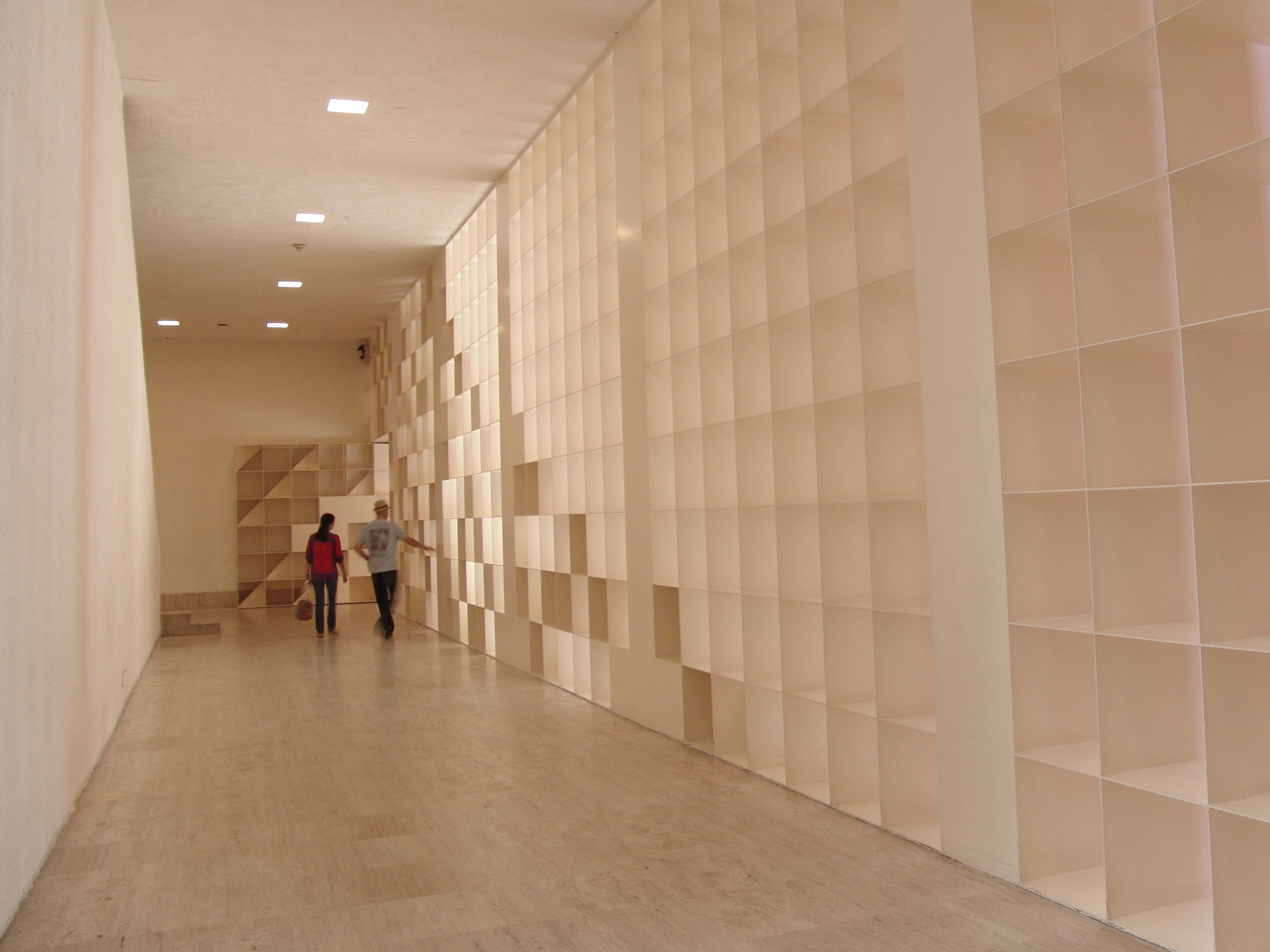

In the heart of Monterrey stands the Museo de Arte Contemporáneo de Monterrey (MARCO), designed by renowned Mexican architect Ricardo Legorreta and inaugurated in 1991. More than three decades later, it remains one of the city’s most recognizable landmarks—an emblem of how architecture can embody both tradition and modernity.
Legorreta’s design is monumental yet human in scale. Its solid, sand-colored walls suggest permanence, while interior courtyards, reflecting pools, and dramatic plays of light recall Mexico’s vernacular architecture, reimagined through a contemporary lens. At its entrance, Juan Soriano’s bronze dove, “La Paloma,” rises as a symbol of freedom and creativity—an invitation to cross the threshold into the world of art.
Inside, MARCO is as much about atmosphere as it is about space. Corridors and stairways lead to flexible galleries where natural and artificial light are meticulously orchestrated. The building allows monumental installations to coexist with intimate works, always giving art its due presence without overshadowing the architecture. In fact, the dialogue between structure and artwork is what makes the museum unique: MARCO is both container and protagonist.
Beyond its role as a cultural hub, MARCO is a
manifesto of Legorreta’s vision—where color,
geometry, and light converge to create an
architecture that feels timeless. For Monterrey,
the museum has become more than a venue
for exhibitions; it is itself a work of art, a
reminder that architecture, at its best, shapes
not only spaces but also experiences.
And receive exclusive information to travel through Mexico in style!