
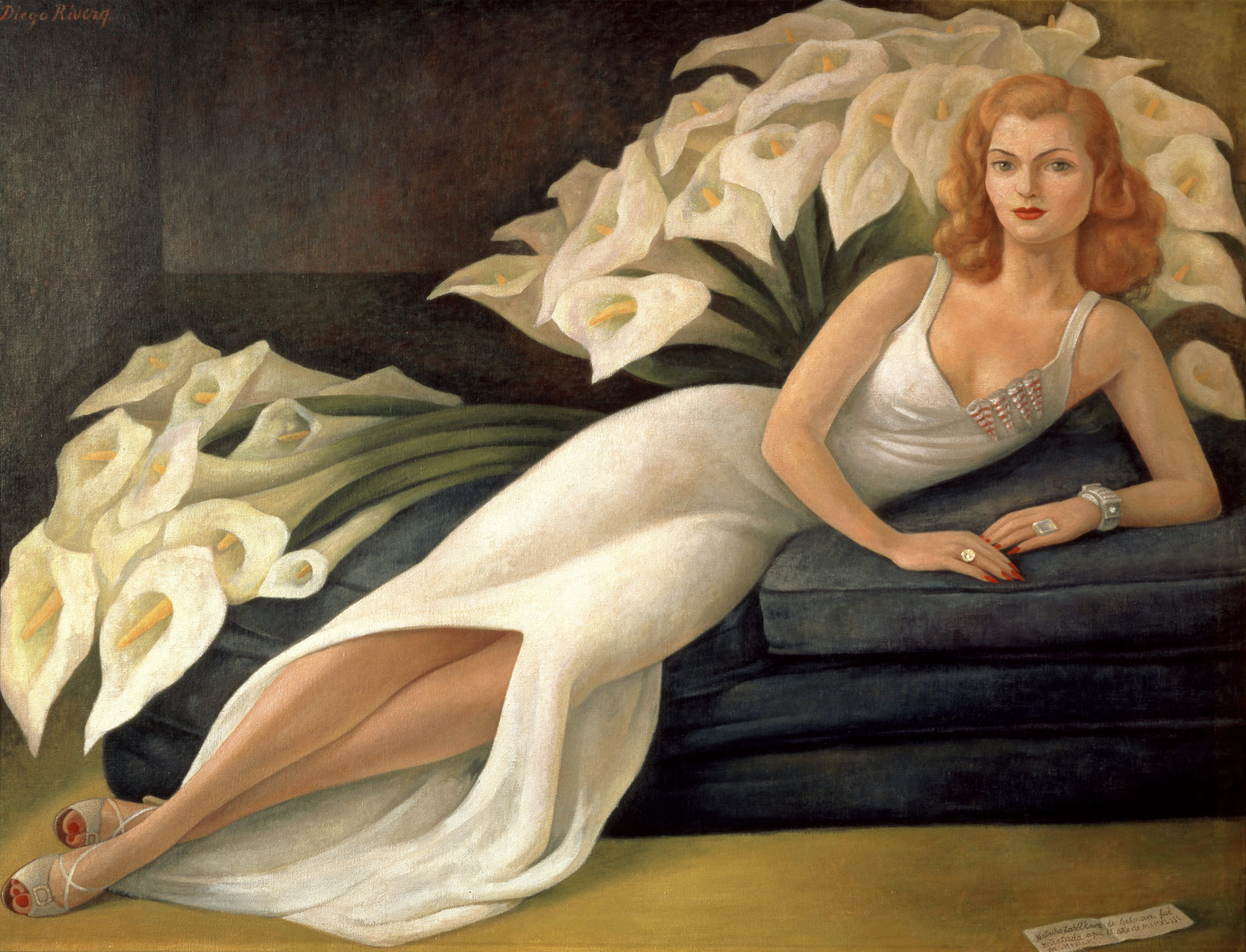

After nearly two decades without being exhibited in the country, Relatos modernos. Obras emblemáticas de la Colección Gelman Santander has opened in Mexico City. And this is no ordinary exhibition on the cultural calendar: it is an event that reshapes the map of Latin American modern art and positions the Mexican capital as a must-visit destination for international travelers with an eye for aesthetics.
Presented by the Secretaría de Cultura del Gobierno de México through the Instituto Nacional de Bellas Artes y Literatura (INBAL), in collaboration with Fundación Banco Santander, the exhibition brings together 68 works from one of the most important private collections of 20th-century Mexican art. Before embarking on a new international tour, the collection symbolically returns to the country where it was born—and where its artists redefined the visual identity of an entire nation.
Gathered since the 1940s by Jacques and Natasha Gelman, the collection is far more than a group of masterpieces: it tells a coherent story about the construction of Mexican modernity. Intimate portraits coexist here with pictorial manifestos, nationalist exaltation with avant-garde experimentation.
Among the works now on display are key oil paintings by Frida Kahlo—including Self-Portrait with Necklace (1933) and Diego on My Mind (1943)—as well as Diego Rivera’s iconic Seller of Calla Lilies (1943), a masterful synthesis of popular tradition and modern language.
The exhibition also features works by Rufino Tamayo, María Izquierdo, and a powerful watercolor self-portrait by José Clemente Orozco, alongside his haunting Salón México (1940), which captures Mexico City’s nightlife with a critical, somber eye.
In total, 27 of the 68 works are officially declared Artistic Monuments, underscoring not only their aesthetic value but also their patrimonial importance.
Four Themes, One Identity in the Making
The curatorial approach guides visitors through four thematic pillars: the construction of a national iconography, the tensions between tradition and modernity, the exploration of nature, and the power of avant-garde visual languages. The result is a multilayered narrative that reveals how Mexico envisioned—and painted—itself during a crucial moment in its history.
For the international visitor, the experience goes beyond mere observation: it is a key to the cultural layers that define contemporary Mexico. To understand Kahlo, Rivera, or Orozco in this context is to grasp the visual roots of a nation that continues to set global standards in design, architecture, and art today.
An Irresistible Reason to Travel Located in the heart of Chapultepec Park at the Museo de Arte Moderno, the exhibition can be visited until May 17, 2026. This reopening confirms once again that Mexico City continues to establish itself as a cultural capital of the hemisphere.
For those planning their next trip with art as their compass, now is the moment. The Gelman Santander Collection has not only returned home—it has reignited an international conversation about Mexican modernity. And seeing it in its country of origin—before it continues its journey around the world—is an unmissable privilege.
And receive exclusive information to travel through Mexico in style!