
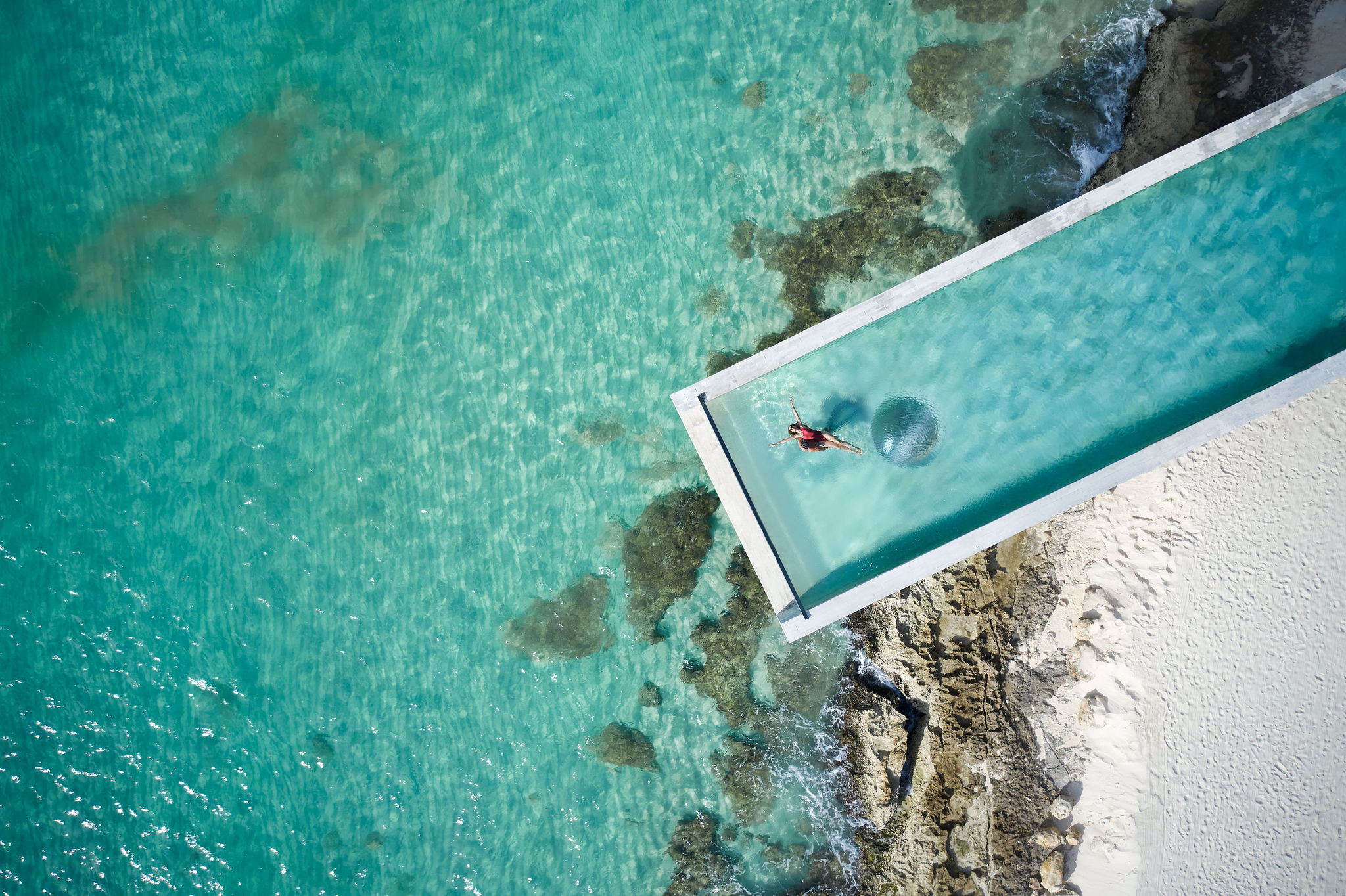

La Casa de la Playa, designed by architect David Quintana, has established itself as an icon of responsible luxury. Located in the heart of the Mayan jungle and facing the Caribbean Sea, its organic lines and integration with the natural environment create immediate visual harmony: wood, stone, and concrete become materials that connect guests with the essence of the place. Named #2 Best Hotel in the World and Best Resort Hotel in Mexico by Travel + Leisure World’s Best Awards in 2024, the project reflects a deep commitment to contemporary aesthetics and ethics.
With 63 unique suites, each with a private pool and habitats for Aurelia jellyfish, the hotel combines high-end luxury with a personalized experience. The uniforms created by Mexican designer Carla Fernández, inspired by indigenous textile techniques, reinforce this link between contemporary design and artisanal tradition. The architecture also incorporates solar panels, osmosis systems for water reuse, smart glass, and rooftop vegetation, demonstrating that conscious luxury is not at odds with impactful architecture.
Following the same architectural philosophy, the Palafitos Overwater Bungalows at Playa Maroma bring the experience of the Maldives’ typical overwater bungalows to Mexico. Their structure on stilts allows each bungalow to have direct access to the sea, terraces, and glass floors that connect guests with marine life. The layout of the spaces enhances the feeling of freedom and privacy, while carefully selected materials ensure comfort and elegance without disrupting the harmony with the surroundings.
Each bungalow has a personal butler, and activities such as beach picnics, kayak rides, or dinners by the campfire take place in an architectural setting that respects and dialogues with the landscape. Local and seasonal cuisine is served in spaces that combine contemporary design and artisanal details, reinforcing the guest’s sensory and cultural experience.
In keeping with this is Chablé Resort & Spa in Yucatán, an example of how architecture responds to landscape and culture. Designed by architect José Carlos Lombana for his residences—which emulate traditional Mayan constructions with thatched roofs and tzalam and cumaru wood—the property blends regional heritage with a modern approach. The casitas designed by Lombana and the interiors by renowned designer Paulina Morán strike a balance between understated luxury and living nature. Local materials, Vermont marble floors, and chukum finishes (a traditional stucco from the peninsula) underscore this dialogue between tradition and modernity. The resort has won the prestigious Prix Versailles for its architecture and design.
On the other hand, there is Casa Amate, a hotel that embodies a fusion of tradition, contemporary aesthetics, and sustainability. Conceived by architect Fernando García and the firm OWN, the project revives Mérida’s vernacular architecture and reinterprets it with clean lines inspired by Art Déco, using local materials and ancestral techniques such as chukum. Its two properties —Casa Amate 61, in La Mejorada, and Casa Amate 62, in Santa Ana— express complementary personalities: the former, in soft pastel pink tones with a creative atmosphere; the latter, in deep blue hues and a more sophisticated style.
Finally, ATELIER Playa Mujeres, on the Yucatan Peninsula, takes all-inclusive luxury to a new level of committed design. The interiors were developed by Curioso and Francisco Hanhausen Arquitectura & Diseño, in collaboration with the hotelier ATELIER de Hoteles. The project was recognized with Gold Key Awards in the categories “Best Resort” and “Best Guestroom Upscale.” Its architecture and interiors celebrate Mexican craftsmanship: sober materials, a palette of natural tones, and careful integration with the maritime landscape. It is an oasis that privileges design, intimacy, and artistic ambiance over ostentatious luxury.
These hotels not only stand out for their architecture;
they are true sanctuaries where culture, nature, and
technology merge, reflecting Mexican creativity and
talent on the world stage.
And receive exclusive information to travel through Mexico in style!